
March 12, 1970


Where Now Are The Dreams Of Youth (1932) ***


Number 17 (1932) ***

The Big Broadcast (1932) ***
The first in the series of four Paramount radio musical films. Starring Bing Cosby. The sequels will star Jack Oakie, Jack Benny and W.C. Fields. Songs include:
"Here Lies Love" **
"Please" *
"Tiger Rag" **
"Nola" **
"Trees" *
"Crazy People" **
"I Was So Beautiful" *
"Minnie The Moocher" **
"Please" (reprise) **
"Here Lies Love" **
"Please" *
"Tiger Rag" **
"Nola" **
"Trees" *
"Crazy People" **
"I Was So Beautiful" *
"Minnie The Moocher" **
"Please" (reprise) **


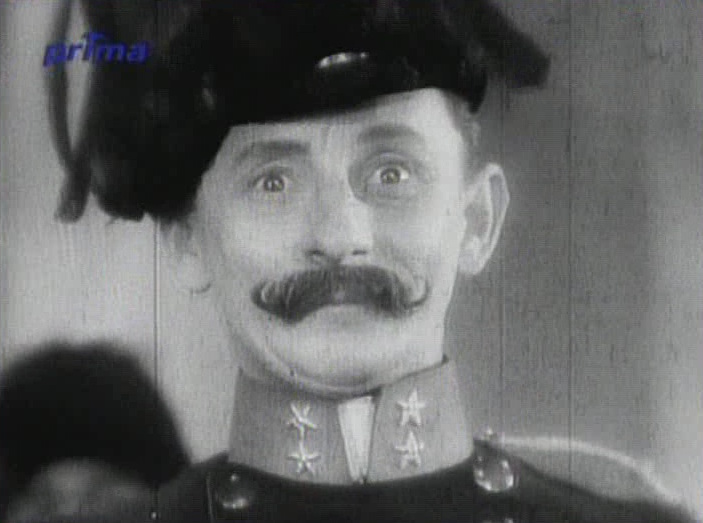
Anton Spelec ostrostrelec (1932) ***


Smilin' Through (1932) **
An old-fashioned melodrama, but better than average. Classy, but manipulative to the extreme.
Rasputin And The Empress (1932) **
This Hollywood version of Rasputin's story was so inaccurate that his assassin, Prince Yusupov, actually sued the studio in a British court and won, forcing all subsequent films (whether inspired by true stories or not) to carry this now-classic disclaimer: "All characters appearing in this work are fictitious. Any resemblance to real persons, living or dead, is purely coincidental".


Night After Night (1932) **
This otherwise very forgettable film about a gangster (George Raft) who falls for a sophisticated society gal, has one redeeming quality - Mae West in a small supporting role (it was her first film). She literally steals the movie from its stars as a vulgar, wisecracking, candid and refreshing gun moll who won't be pushed around. She became a instant star as result of this appearance.
Speak Easily (1932) *
Buster Keaton plays a college professor who believes that he inherited a fortune and decides a finance a Broadway show.
Seven Seas Part 2: Chastity Chapter (1932) *

The Music Box (1932) *****


The Dentist (1932) ***

What Price Hollywood (1932) ***
Hollywood melodrama about a famous movie star and the men in her life. An inspiration for "A Star Is Born" (1937) and its 1954 remake.
Their First Mistake (1932) ***
Stan and Ollie adopt a baby together. Of all their films, this is the one where their relationship is the most obviously homosexual.
The Musical Doctor (1932) **
Directed by R.Cozine. In Doctor Rudy Vallee's hospital, physicians cure their patients with songs. Mae Questel (the voice of Betty Boop) plays a nurse.
County Hospital (1932) **
There is one classic gag (involving Ollie's leg in plaster attached to a rope held by a man hanging from a window), but otherwise it's a very disappointing Laurel & Hardy short.
Dream House (1932) **
Directed by Del Lord, and produced by Mack Sennett. Bing Crosby comes to Hollywood looking for his fiancee.
Any Old Port (1932) *

 A rather unpleasant Laurel & Hardy short, uneasily mixing slapstick humor with sexual abuse of women.

The Phantom President (1932) **
George M. Cohen, the legend of American theatre (immortalized by James Cagney in "Yankee Doodle Dandy"), in his best, though otherwise mediocre, motion picture. Musical numbers:
"The Country Needs A Man" *
"Somebody Ought To Wave A Flag" *
"Give Her A Kiss" *
"The Convention" *
"The Country Needs A Man" *
"Somebody Ought To Wave A Flag" *
"Give Her A Kiss" *
"The Convention" *
Rain (1932) **
A self-righteous preacher (Walter Huston) tries to reform a prostitute (Joan Crawford). Set on a rain-soak Pacific island of Pongo Pongo, this melodrama is a little too discreet.
Mr Robinson Crusoe (1932) *
A young man (Douglas Fairbanks) makes a bet that he could survive on a desert island just like Robinson Crusoe. A predictable, completely uninvolving film.
Red Dust (1932) ***
Clark Gable and Jean Harlow heat up the screen in this sexy melodrama set in the Malayas.
Tarzan The Ape Man (1932) ***
The first "Tarzan" movie starring Johnny Weismuller and Maureen O'Sullivan.
The Most Dangerous Game (1932) ***
A sort of a dry run before "King Kong" - an aventure film set on a mysterious tropical island - only, instead of a giant ape, we got a cruel villain who likes to hunt people.
The Kid From Spain (1932) ***

"The College Song" **
"In The Moonlight" *
"Look What You've Done" *
"What A Perfect Combination" ***
I'M A Fugitive From A Chain Gang (1932) ***
Excellent film that works equally well as a gangster film about an escaped convict and a serious drama about social injustice.
Boudu sauve des eaux (1932) ***


Shanghai Express (1932) ****

One Hour With You (1932) ****

"What A Little Thing Like A Wedding Ring Can Do" **
"We Will Always Be Sweethearts" **
"Three Times A Day" **
"One Hour With You" ***
"Oh That Mitzi" **
"We Will Always Be Sweethearts" (reprise) **
"Now I Ask You What Would You Do" **
Horse Feathers (1932) ***
Marx Brothers are clowning again, only this time, they are doing it in a respectable institution of higher learning. "Everyone Says I Love You" is first sung by Zeppo, then sung and played on a piano by Chico, then played on a harp by Harpo and finally serenaded on a guitar by Groucho. Songs:
"I'M Against It" **
"I Always Get My Man" *
"Everyone Says I Love You" **
"I'M Against It" **
"I Always Get My Man" *
"Everyone Says I Love You" **
Grand Hotel (1932) ****

Freaks (1932) ****

Scarface (1932) *****

Trouble In Paradise (1932) *****

Love Me Tonight (1932) *****

"Song Of Paree" *
"How Are You ?" *
"Isn't It Romantic ?" ***
"Lover" **
"Mimi" ***
"The Poor Apache" *
"Love Me Tonight" **
"The Son Of A Gun Is Nothing But A Tailor" ***
Chess-nuts (1932) ****

Flowers And Trees (1932) ****

Crazy Town (1932) ****

Boop-Oop-A-Doop (1932) ****

Minnie The Moocher (1932) ****

Betty Boop's Ups And Downs (1932) ****

The Office Boy (1932) ****

Mickey In Arabia (1932) ****


The Klondike Kid (1932) ****
.jpg)

Freddy The Freshman (1932) ***
Cars racing, folks dancing, owls howling, spectators cheering and freshmen playing ball. Fast, loud, high-spirited romp with plenty of energy to spare.
A Hunting We Will Go (1932) ***
Bimbo and Koko are hunting big game (lions, leopards and bears). They want to impress Betty Boop, but wouldn't she rather be naked than wear fur?
Piano Tooners (1932) ***


Moonlight For Two (1932) ***
A beautiful forest at full moon is the setting of this gentle musical cartoon with characters riding in wheelbarrows across swift streams, farm animals dancing in the barn and gunfights fought over foxy dames. Quite short, but very memorable, with beautiful backgrounds.

You Try Somebody Else (1932) ***
Ethel Merman sings the beautiful title song. There are also two animated sequences, one featuring Betty Boop defending her refrigerator from a hungry cat, another set in a prison.
The Dancing Fool (1932) ***
Bimbo and Koko are painters working on a high-rise building, while Betty Boop is a dancing instructor.
Pencil Mania (1932) ***
A Van Beuren cartoon starring Tom and Jerry (a human duo). Quite innovative.

Subscribe to:
Posts (Atom)