May 13, 1970
I Vinti (1953) ***
Very good Italian film, directed by Michelangelo Antonioni, consisting of three shorts set in three different countries. Segments:
"Francia" ***
"Italia" ****
"Inghilterra" ****
Sprawa do zalatwienia (1953) ***
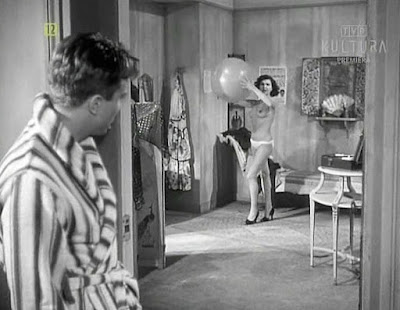
Suprisingly subversive comedy made in Poland during the Stalin era. While seemingly very pro-Communist, the film inadvertently reveals numerous absurdities of the ruling system.
El Bruto (1953) ***
The final instalment in his "Mexican melodramas" trilogy, preceded by "Daughter Of Deceit" (1951) and "Woman Without Love" (1952).
Julius Caesar (1953) **
A conventional adaptation of Shakespeare's famous play about the death of the first Roman emperor.
Roman Holiday (1953) **
Audrey Hepburn is delightful in this hopelessly conventional romantic comedy set in Rome.
I Confess (1953) **
Hitchcock thriller set in Quebec City, about a priest falsely accused of murder and unable to defend himself because of the secret of the confession.
Zolnierz zwyciestwa (1953) *
A perfect example of a bad, ineffective, heavy-handed and ham-fisted Stalinist propaganda film from Poland. Unlike many other contemporary socialist-realist works (such as "Miasto nieujarzmione", "Gromada", "Trzy opowiesci", "Celuloza" or "Pod gwiazda frygijska") which use the Stalinist propaganda effectively and convincingly, this is such an inept and ridiculous attempt that one is almost tempted to suspect a self-sabotage on the part of its otherwise talented director, Wanda Jakubowska (whose "Ostatni etap", a leftist, but non-Stalinist work, was the best Polish film of 1948). Allegedly a biographical drama about a famous Polish Communist general, Karol Swierczewski, the film spends so much time and energy on countless supporting characters, parallel storylines and other digressions, that its narrative structure literally collapses in a heap of rubble. Attempting to trace the highlights of Swierczewski's career (from his participation in the Soviet Revolution, through the Spanish Civil War to the battlefields of World War II and the repression of the Ukrainian resistance in the Bieszczady Mountains, where he died in 1947), the film often forgets its nominal hero, and focuses on many other subjects, unrelated to his life. Ultimately, it feels less like a biopic, and more like an epic drama about the fight between Communism and Fascism in the first half of the 20th century, but a horribly disjointed and confusing one.
How To Marry A Millionaire (1953) *
One of the worst comedies of the 1950's - stupid, sexist, hopelessly dated, unbelievably boring and incompetently directed.
Return To Glennascaul (1953) ***
An Irish ghost story. Nominated for an Oscar. Costarring Orson Welles as himself.
Eaux d'artifice (1953) ***
An eerie and oneiric film, that uses water fountains of Villa d'Este in Tivoli as visual metaphors symbolizing sexual arousal and orgasmic pleasure.
Kolejarskie slowo (1953) ***
Socialist realist documentary about brave railway workers keeping trains running on time in Stalinist Poland.
The Alaskan Eskimo (1953) **
Oscar-nominated Disney documentary short about the Eskimos from Alaska.
Lili (1953) ***
Leslie Caron stars in this beautiful film set in a circus. One song:
"Hi Lili, Hi Lo" ***
The War Of The Worlds (1953) ***
Much better than the disastrous Steven Spielberg's blockbuster with Tom Cruise.
Pickup On South Street (1953) ***
Superbly directed thriller about evil Communist spies trying to retrieve a stolen microfilm.
Fear And Desire (1953) *
Stanley Kubrick's first film is a pretentious, badly directed mess about a group of soldiers on a mission. Completely different, stylistically and otherwise, from all his other movies.
La Salaire de la peur (1953) ****
One of the most tense and exciting films ever made. The story is about two desperados driving huge trucks full of nitroglycerine over bumpy country roads in South America.
Peter Pan (1953) ****
Underrated, but very entertaining animated Disney feature about a boy who refuses to grow up. He prefers fighting with Captain Hook, saving an Indian princess and flirting with sexy mermaids. He also invites Wendy, John and Michael to fly with him to Neverland. But there is trouble when little Tinker Bell, who resents Peter Pan's attentions towards Wendy, becomes angry and reveals his hiding place to Captain Hook. Songs:"You Can Fly" **
"A Pirate's Life" *
"Tee Dum Tee Dee" **
"What Makes The Red Man Red ?" *
"Your Mother And Mine" *
"The Elegant Captain Hook" *
Calamity Jane (1953) ***
The strong lesbian subtext of this film probably wasn't fully understood at the time, but today is quite obvious. Songs:
"The Deadwood Stage" ***
"I've Got A Heart Full Of Honey" *
"I Can Do Without You" **
"'Tis Harry I'M Plannin' To Marry" **
"Just Blew In From The Windy City" **
"Keep It Under Your Hat"
"Keep It Under Your Hat" (reprise) **
"Higher Than A Hawk" *
"A Woman's Touch" *
"The Black Hills Of Dakota" **
"'Tis Harry I'M Plannin' To Marry" (reprise) *
"Secret Love" ***
"The Deadwood Stage" ***
"I've Got A Heart Full Of Honey" *
"I Can Do Without You" **
"'Tis Harry I'M Plannin' To Marry" **
"Just Blew In From The Windy City" **
"Keep It Under Your Hat"
"Keep It Under Your Hat" (reprise) **
"Higher Than A Hawk" *
"A Woman's Touch" *
"The Black Hills Of Dakota" **
"'Tis Harry I'M Plannin' To Marry" (reprise) *
"Secret Love" ***
Easy To Love (1953) ***
An Esther Williams musical with an exhilaratingly spectacular water-ski finale by Busby Berkeley. Songs include:
"Didja Ever" **
"Look Out! I'M Romantic" *
"Coquette" *
"Easy To Love" **
"That's What A Rainy Day Is For" *
"Didja Ever" **
"Look Out! I'M Romantic" *
"Coquette" *
"Easy To Love" **
"That's What A Rainy Day Is For" *
Gentlemen Prefer Blondes (1953) ***
Marilyn Monroe plays a smart-but-acting-dumb blonde whose eyes sparkle every time she sees a diamond or a tiara. Jane Russell plays her brunette friend who's slightly more romantic (i.e. naive) when it comes to men. Songs:
"Two Little Girls From Little Rock" **
"Bye Bye Baby" **
"Ain't There Anyone Here For Love" *
"When Love Goes Wrong" **
"Diamonds Are A Girl's Best Friend" ***
The Girl Next Door (1953) ***
Very charming little musical starring June Haver and Dan Dailey as two lovebird neighbors. UPA contributed two fine cartoon sequences. Songs:
"We Girls Of The Chorus" *
"The Great White Way" *
"A Quiet Little Place In The Country" *
"If I Love You A Mountain" *
"I'D Rather Have A Pal Than A Gal - Anytime" *
"You're Doing Allright" **
"Nowhere Guy" *
"The Girl Next Door" **
"You Walk By" **
"If I Love You A Mountain" (reprise) *
"We Girls Of The Chorus" *
"The Great White Way" *
"A Quiet Little Place In The Country" *
"If I Love You A Mountain" *
"I'D Rather Have A Pal Than A Gal - Anytime" *
"You're Doing Allright" **
"Nowhere Guy" *
"The Girl Next Door" **
"You Walk By" **
"If I Love You A Mountain" (reprise) *
Glend Or Glenda (1953) ***
Edward D.Wood Jr achieved lasting fame as the least talented film director in Hollywood. His film debut, "Glen Or Glenda" (a sincere plea for tolerance for transvestitism) is much more substantial in content than his later camp classics. Stylistically, however, the film is just as brilliantly inept as the others.
Kiss Me Kate (1953) ***
Kathryn Grayson gives the finest performance of her career as Lilli Vanessi, a divorced stage actress playing Kate in a musical version of Shakespeare's "The Taming Of The Shrew" and fighting with her former husband (Howard Keel playing Fred Graham playing Petruchio). Superlative musical score by Cole Porter includes many show stoppers:
"So In Love" **
"Too Darn Hot" **
"Why Can't You Behave ?" **
"Wunderbar" **
"We Open In Venice" **
"Tom, Dick And Harry" ***
"I've Come To Wive It Wealthily In Padua" *
"I Hate Men" ***
"Were Thine That Special Face" *
"Where Is The Life That Late I Led" **
"Always True To You Darling In My Fashion" **
"Brush Up You Shakespeare" **
"From This Moment On" ***
"Kiss Me Kate" *
"So In Love" **
"Too Darn Hot" **
"Why Can't You Behave ?" **
"Wunderbar" **
"We Open In Venice" **
"Tom, Dick And Harry" ***
"I've Come To Wive It Wealthily In Padua" *
"I Hate Men" ***
"Were Thine That Special Face" *
"Where Is The Life That Late I Led" **
"Always True To You Darling In My Fashion" **
"Brush Up You Shakespeare" **
"From This Moment On" ***
"Kiss Me Kate" *
Le Carrosse d'or (1953) ***
A film by Jean Renoir about a European theatrical troupe in colonial-era Latin America.
Mogambo (1953) ***
Ava Gardner gives her best performance in this fine remake of "Red Dust" (1932). Clark Gable reprises his earlier role.
The Moon Is Blue (1953) ***
This charming romantic comedy was considered quite racy and scandalous upon its release, but today it might represent the essence of old-fashioned innocence.
Small Town Girl (1953) ***
Pleasant musical about a millionaire playboy courting a judge’s daughter (Jane Powell). Musical numbers:
"Lullaby of the Lord" *
"Fine Fine Fine" **
"Small Towns Are Smile Towns" *
"Take Me To Broadway" **
"The Fellow I’d Follow" *
"I’ve Got To Hear That Beat" ***
"My Flaming Heart" **
"Take Me To Broadway" (reprise) ***
"My Gaucho" **
"Lullaby of the Lord" *
"Fine Fine Fine" **
"Small Towns Are Smile Towns" *
"Take Me To Broadway" **
"The Fellow I’d Follow" *
"I’ve Got To Hear That Beat" ***
"My Flaming Heart" **
"Take Me To Broadway" (reprise) ***
"My Gaucho" **
Tokyo Story (1953) ****
An elderly couple visit their grown-up children in Tokyo. It's neither a comedy, nor a straight drama, but a bittersweet mixture of both. Probably Ozu's best film from the 1950's.
El (1953) ***
A typical film by Luis Bunuel. The first in his "surrealist trilogy" of Mexican black comedies, followed by "The Criminal Life Of Archibald de la Cruz" in 1955 and "The Exterminating Angel" in 1962.
The Robe (1953) *
The story of a Roman centurion who crucified Jesus Christ and later became a Christian convert. The first film in CinemaScope.
Invaders From Mars (1953) *
Really bad Cold War sci-fi flick about a small American town being taken over by aliens. Director William Cameron Menzies is unable to create any kind of suspense. The film has a tediously overstretched climax, followed by a completely asanine twist ending.
The Stars Are Singing (1953) *
Very bad musical starring Rosamary Clooney (George Clooney's aunt). Something about an illegal immigrant girl from Poland who can sing. Musical numbers include:
"Feed Fido Some Rruff" *
"Haven't Got A Worry To My Name" *
"Come On-A-My-House" *
"Feed Fido Some Rruff" *
"Haven't Got A Worry To My Name" *
"Come On-A-My-House" *
Toot Whistle Plunk And Boom (1953) *****
A terrific Walt Disney cartoon about the historical evolution of various musical instruments (from prehistoric caves to modern nightclubs). Witty and informative, this Oscar-winning gem is a perfect example of UPA's influence in the field of animation in 1950's.
Duck Dodgers In The 24 1/2 Century (1953) *****
George Lucas' favorite cartoon, a great tongue-in-cheek parody/tribute to the Buck Rogers and Flash Gordon sci-fi serials. The film stars Daffy Duck as the title character and Porky Pig as an "eager space cadet", much smarter than his captain. Together, they find a mysterious planet X, which contains a precious mineral used for shaving creams. Unfortunately, Marvin Martian arrives there as well, claiming the planet for Mars. A hilarious conflict ensues, complete with an ultimatum dispatcher (a gun that fires bullets carrying written messages) and an ultimatum answerer (which fires bullets only). At the end, Daffy wins and takes possession of the planet, which unfortunately has been blown to pieces, shrinking in size to a single rock. The visuals are superb.
The Unicorn In The Garden (1953) *****
Visually stunning adaptation of James Thurber's story. A low-key, melancholic cartoon about a nice, quiet man who finds a simple (and perfectly legal) way of getting rid of his mean, obnoxious wife. The drawings have a unique, sloppy kind of look, perfectly corresponding to the central character's easy-going, unpretentious personality.
Duck Amuck (1953) *****
Arguably the greatest cartoon of all times and certainly the most self-reflexive and brechtian. Poor Daffy Duck is constantly frustrated by an invisible cartoonist, who insists on changing the scenery, manipulating the soundtrack and playing all kinds of dirty tricks on our hero. Daffy finds himself erased and redrawn as a ridiculous, four-leg monstruosity, while his voice is dubbed (by a chicken), only to be falling down from a crushed airplane with an anvil instead of a parachute. Daffy's very strong personality really emerges in this film, which he carries all by himself, giving an outstanding performance, full of rage and frustration. "Duck Amuck" is a marvelously entertaining, truly hilarious animated masterpiece.
The Tell-Tale Heart (1953) *****
Certainly the greatest non-comic animated film, and arguably the most stylish and inventive of all UPA cartoons. It's a chilling and very disturbing adaptation of the E.A.Poe short story about an insane butler who kills his elderly master. The macabre premise and creepy settings reinforce the blood-chilling effect of the first-person narration by James Mason, which forces the viewer to identify with the point-of-view of a deranged assassin. The bizarrely designed settings (superior to anything since "The Cabinet of Dr Caligari") perfectly reflect the main character's distorted frame of mind.
Football: Now And Then (1953) ****
A completely wacky cartoon about a football game between "old-timers" (veterans of the American Revolution) and a "modern" team. Frequently interrupted by commercial spoofs, it's an absolutely insane piece of incoherent nonsense.
Duck! Rabbit! Duck! (1953) ****
The conclusion of the Bugs-Daffy-Elmer trilogy, once again dominated by a hilarious game of one-upmanship. This time, when Daffy can't agree with Bugs if it's really a duck season, the smart rabbit tricks the dupe into saying something like "I guess I'm the goat/skunk/pigeon" and flashes a sign reading "goat/skunk/pigeon season opened". The poor duck is tired of having his beak blown in yet another direction and Bugs convinces Elmer that it's really a baseball season (predictably, the dim-witted hunter goes off shooting a baseball).
Rugged Bear (1953) ****
Hilarious cartoon with Humphrey Bear (in his film debut) hiding from hunters in Donald's home and pretending to be a rug on the floor, while enduring countless tortures and humiliations. The backgrounds clearly reveal a UPA influence.
Much Ado About Nutting (1953) ****
A stylish cartoon with no dialogues about a cute squirrel trying to crack a large nut. Her exasperation increases as the nut cracks other objects instead, including stones and axes. Her frustrated attempts to reach her elusive goal result in a veritable cascade of gags, which gradually increase in magnitude and tempo. Chuck Jones' unique ability to tell his stories in purely visual terms is very evident in this cartoon classic.
A Mouse Divided (1953) ****
When a drunken stork mistakenly delivers a baby mouse to Sylvester's residence, the cat's initial impulses are more culinary than paternal, ("I've become a father of a breakfast", he complains). But when a bunch of alley cats try to snatch his new son, he courageously defends him. When the stork returns to deliver the baby to its proper destination, Sylvester takes his son's place and becomes a toddler of Mr and Mrs Mouse ("Nothing like this ever happened on my side of the family", she complains). An immensely entertaining cartoon, moving from cute to cynical to hilarious, while remaining constantly inventive and surprising.
Subscribe to:
Posts (Atom)